






Dr. Cook artifacts 10: The Royal Copenhagen porcelains
Written on April 20, 2025
On September 4, 1909 Dr. Cook landed in Copenhagen to the adulation of the masses assembled along the shore of the Danish capital’s harbor to greet the explorer as he disembarked from the Hans Egede.
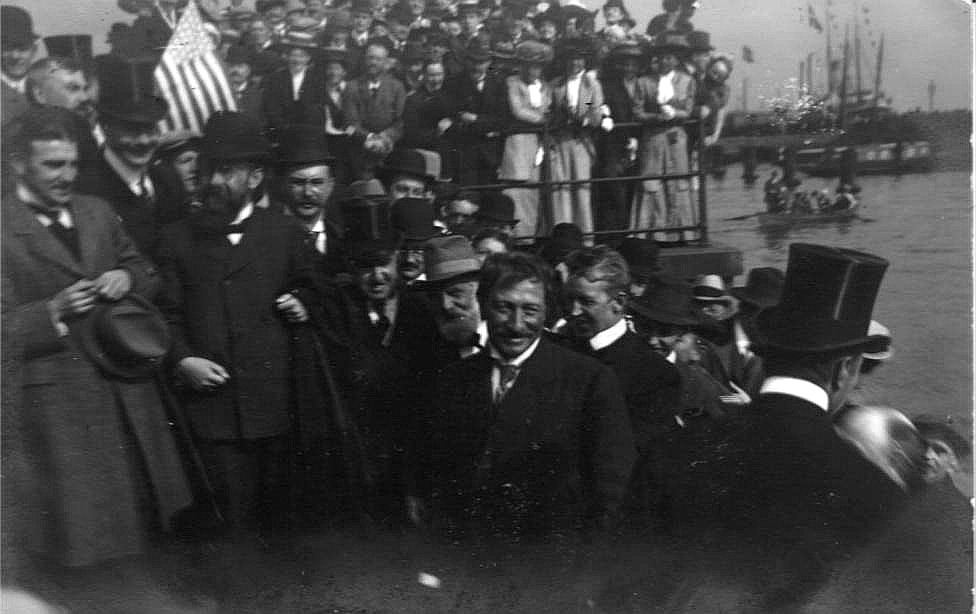 He was swept in a mad crush to the Meteorological Department building, where he gave a little speech from the balcony before being hustled out the back door to a waiting carriage and taken to the Hotel Phoenix. The weather-beaten explorer was then put into the hands of Copenhagen’s finest barbers and tailors. A dentist was called in, several chipped teeth were attended to, and when the time came to accompany the American Minister to Denmark to the legation, Cook reappeared, perfectly groomed and faultlessly attired.
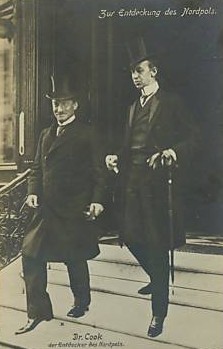
In the afternoon, he was presented by Minister Egan to King Frederick at Bernstoff Castle in an audience that lasted an hour. In the evening he spent an hour answering questions, many of them hostile, from reporters from all over the world who had come to Copenhagen when it was learned that it was there that he would first touch European soil.
The next day he visited the Royal photographer to have his portrait made,
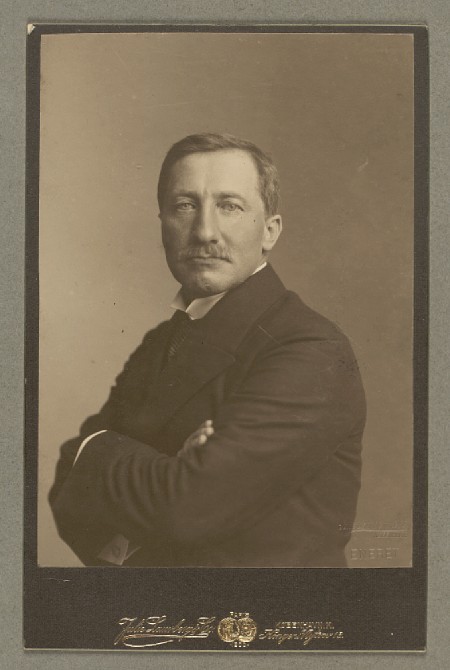
and in the evening Cook was the guest of honor at the royal palace, Charlottenlund, where the entire royal family, down to the smallest child, was present. At dinner the doctor sat at the right hand of the king—an honor no one could remember ever having been given to a private individual. After dinner, which was a quiet affair, the three princesses, Ingeborg, Thyra, and Dagmar, and all the children gathered around Dr. Cook to hear a recounting of his adventures. He took delight in telling the youngest children about the polar bears and other animals of the Far North, answering their every eager question.
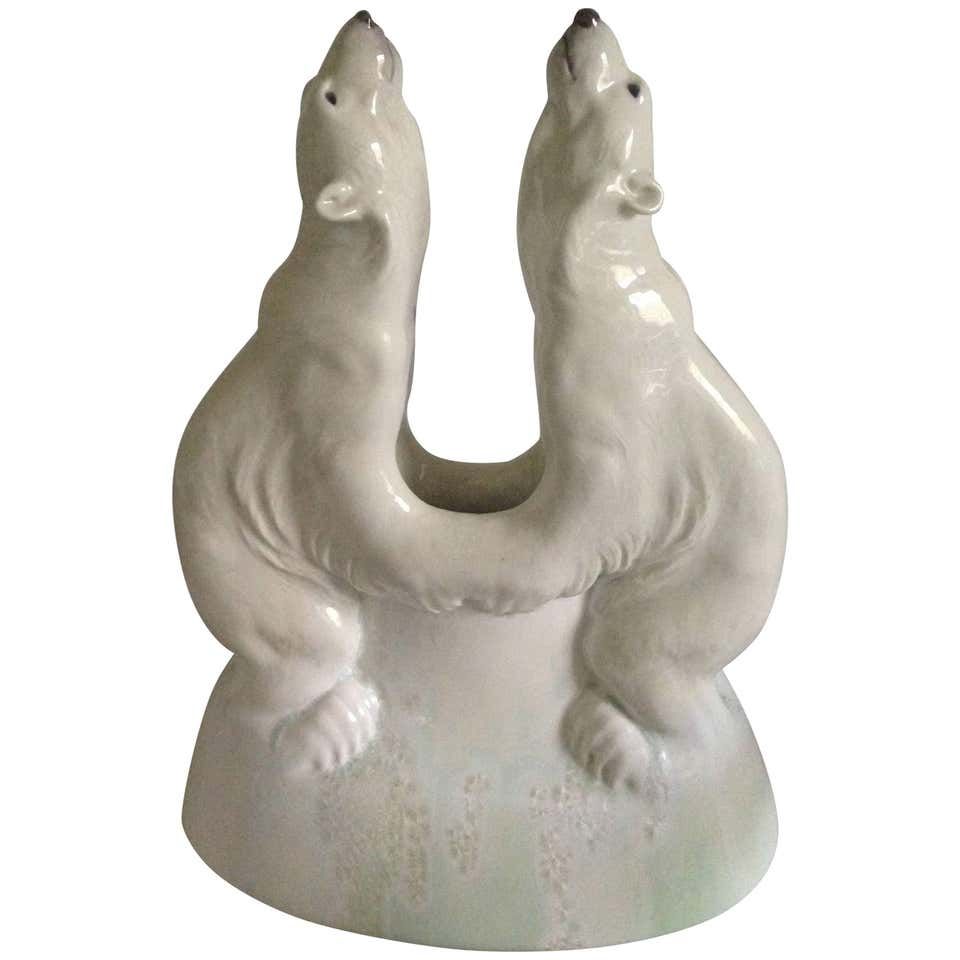
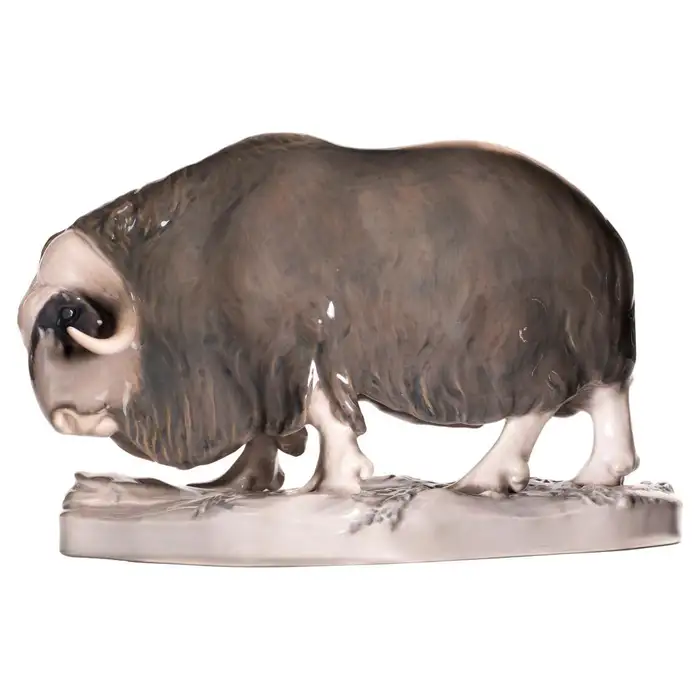
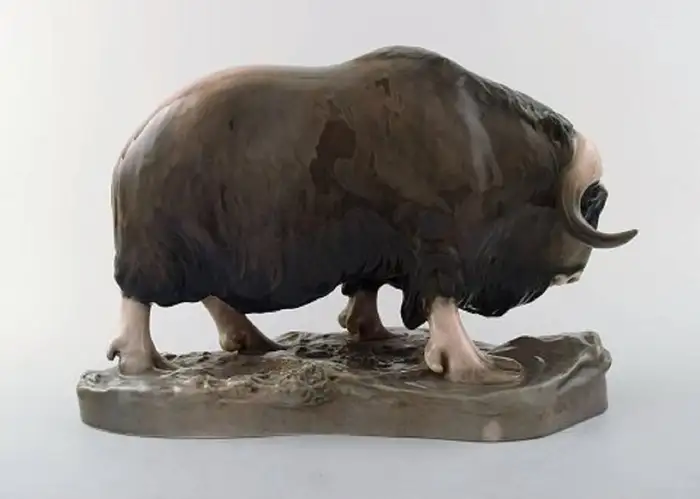
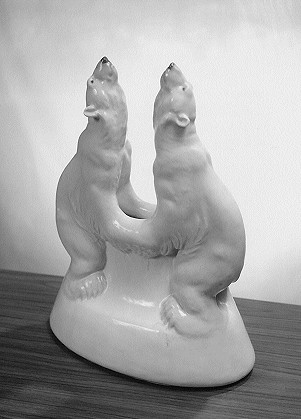
As a parting gift and souvenir of his visit, King Frederick presented him with two ceramics from the royal porcelain factory, Royal Copenhagen. One was a huge vase in the shape of two polar bears, the other a large figurine of a musk oxen.
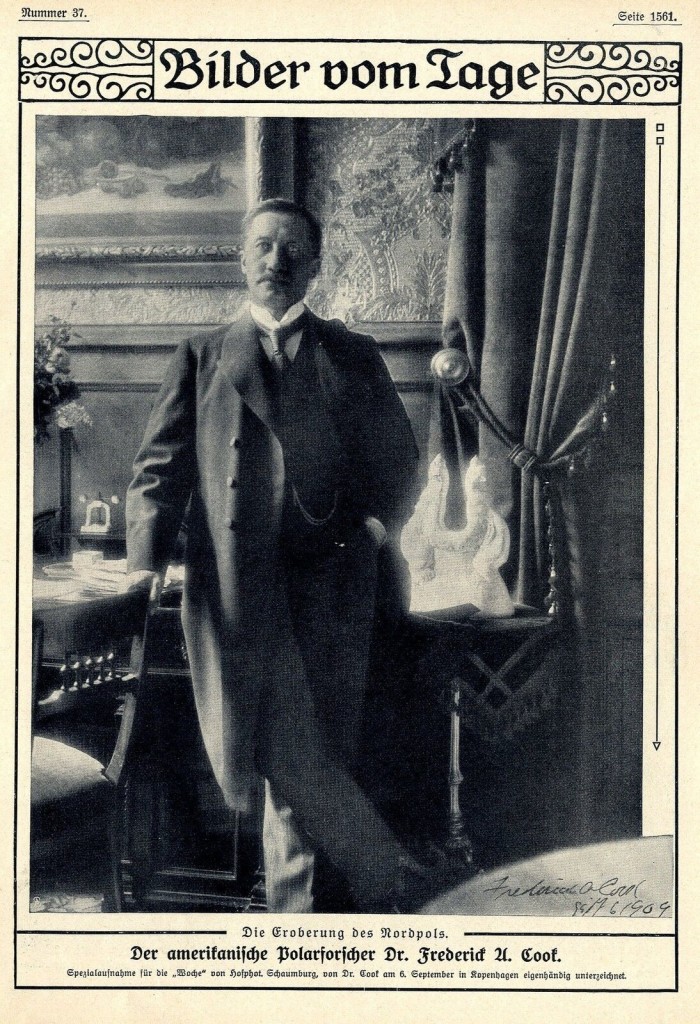
Here is a photo of Dr. Cook in which can be seen the vase in the background.
These items are not unique, but were taken from the stock of Royal Copenhagen, their style numbers being #530 for the musk ox figurine, and #1831 for the polar bear vase.
The actual ones given by the king to Cook still survive, however. The vase is now in the possession of the family of the late Bette Hutchinson, Cook’s step-granddaughter.
The musk ox is in the possession of the Sullivan County Historical Society in Hurleyville, NY, which maintains a room devoted to Dr. Cook.
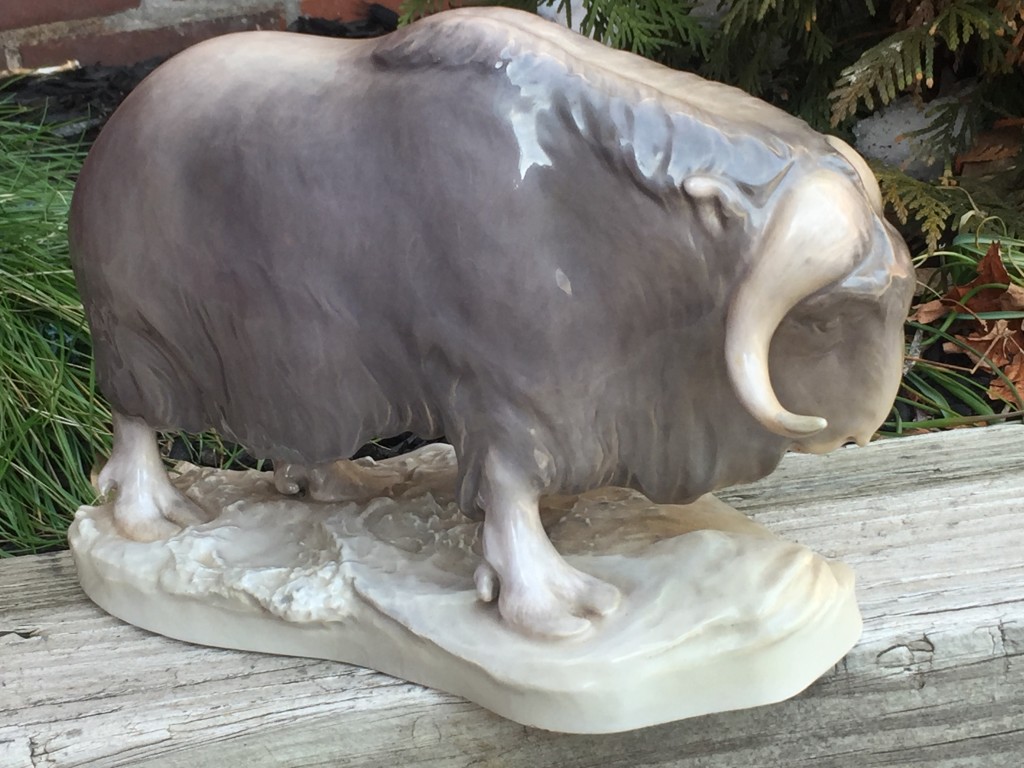
It was given by the will of Dr. Cook’s granddaughter, Janet Vetter. It is not on display at this time.
The photo of the Dr. Cook’s polar bear vase is courtesy of the late Bette Hutchinson; the photo of the musk ox is courtesy of Carol Smith.
Filed in: Uncategorized.