






Polar Controversy Literature Part 1: 1910: The North Pole
Written on August 18, 2025
This is the first in an occasional series that will examine the published literature in book form relevant to the details of the Polar Controversy. These books will be discussed in the order they were published. The first is Peary’s personal narrative of his alleged “discovery of the North Pole,” a claim now almost entirely discounted as a fraud.
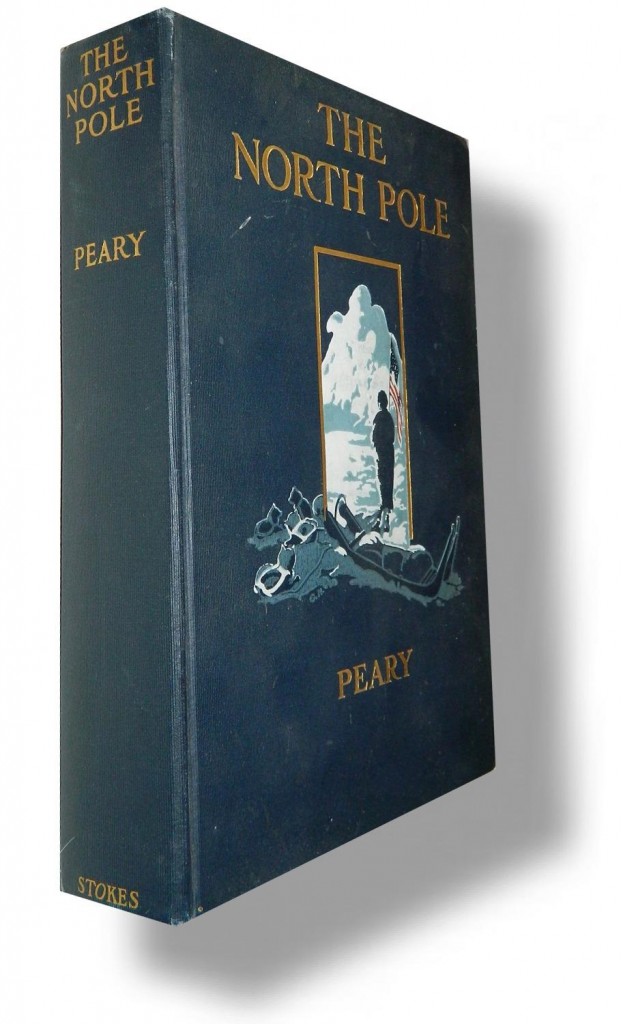
The book Peary published should have been the prime document stating his case and resolving all questions surrounding his claims, yet, The North Pole has been instead the primary document used to argue against his alleged discovery. How could it be that the book that claims to be the record of Peary’s ultimate success in the goal of a lifetime has come to be the sourcebook of those who brand it a fraud? Beyond the real questionable aspects of Peary’s claimed feat, the answer lies in the strange history of this book, which indicates that Peary had relatively little to do with the finished narrative that appears on its pages. In fact, Peary actually “wrote” none of it.
The book is largely derived from the series of articles that appeared in the pages of Hampton’s Magazine in 1910 as “Peary’s Own Story,” whose actual author was the poet, Elsa Barker. Barker was not the first choice to write Peary’s narrative, however. The man chosen to do the job of ghostwriting the articles was originally Harris Merton Lyon. His trial article was rejected, however, because after talking to Peary he could not fathom why anyone would want to reach the North Pole and it showed in the copy he provided Hampton’s. As a result, Ben Hampton, the magazine’s publisher, called in Barker, who had shown her enthusiasm for the story and who had written a preliminary article introducing the series to the magazine’s readers.
Barker left a detailed account of how she assembled material needed for the series, which has already been reproduced in this blog in the post dated May 25, 2025. Because it was assembled from interviews with not only Peary himself, but also with several of his associates, including Captain Robert E. Bartlett, and from many details plagiarized from the voluminous diary kept by the expedition’s physician, John W. Goodsell, and even from certain passages that had previously appeared in Peary’s 1907 book, Nearest the Pole, it necessarily lacked the singular perspective it would have had had Peary written it himself from his own point of view. Barker’s procedure produced a narrative that was sometimes contradictory even as to material facts. These flaws and the doubtful aspects of Peary’s speed after leaving behind his last navigation-trained witness, as well as discrepancies with accounts subsequently published by Matt Henson and other members of his expedition, were later exploited by those seeking to show the narrative of events his book contained to be unreliable. Despite her urgent requests, Peary seemed reluctant even when asked by Barker to provide specific material that she needed to fill out crucial parts of Peary’s narrative, especially in regard to the days he allegedly spent at the North Pole.
Even though inconsistencies were pointed out in the press as the Hampton’s series progressed, and many who read them found the narrative they contained unconvincing as “proof” of Peary’s discovery, most of these were not resolved in Peary’s subsequent book published by Frederick A. Stokes. The man chosen to ghostwrite the book version was a former reporter for the New York Sun named A.E. Thomas. Thomas was even more frustrated in his dealings with Peary over the material he sought, and so was forced to rely heavily on the content of the Hampton’s articles Barker had written. Thomas’s later claim that he wrote 80% of the book can be easily discounted because at least that much is drawn materially from Barker’s articles, most of it taken from them verbatim. Thomas, too, like Barker, was forced to rely on interviews with Bartlett, Goodsell and Donald MacMillan because Peary was away on a tour of Europe at the time, and when he returned seemed more interested in trying to get a bill through Congress that would retire him as a rear admiral than in providing copy. Thomas later excused himself for the result, saying that because Peary was “a damned dull human being,” incapable of providing exciting material, The North Pole was “a damned dull book.”
When published in September 1910, the book received largely good reviews, but Peary had antagonized so many by his boorish behavior during the late dispute with Dr. Frederick A. Cook, that it sold slowly and was not, in the end, a financial success. His German publisher was so dissatisfied with his sales that he brought suit against Peary to recover his purchase price for the rights, saying it didn’t sell because there was nothing in the book that could prove Peary actually reached the North Pole.
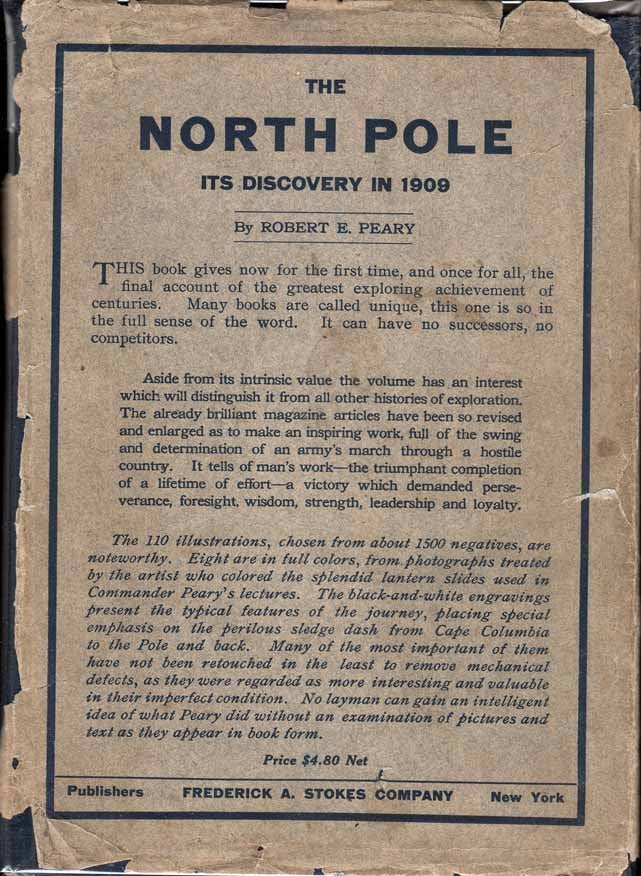
The book was reprinted once in 1910, but never again by Stokes. The book is rather common, but its plain dust jacket is very scarce.
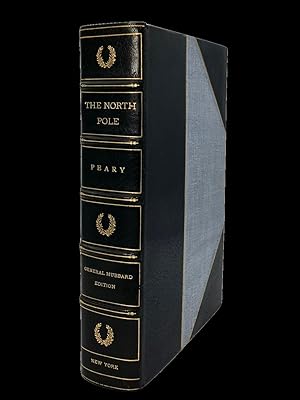
Stokes also brought out a limited, signed edition of 500 copies, partially leather bound, dubbed the “Thomas H. Hubbard Edition,” after the President of the Peary Arctic Club.
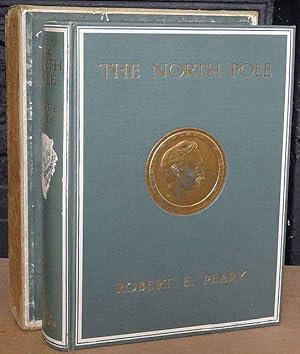
There were two editions in England as well, the ordinary edition, which could be had in a slipcase, and another limited edition of 500 put out in white vellum binding, both showing a facsimile of the gold medal presented Peary by the Royal Geographical Society in 1910. The limited edition was signed not only by Peary but by Robert Bartlett as well, who, as a Newfoundlander, was a British subject.
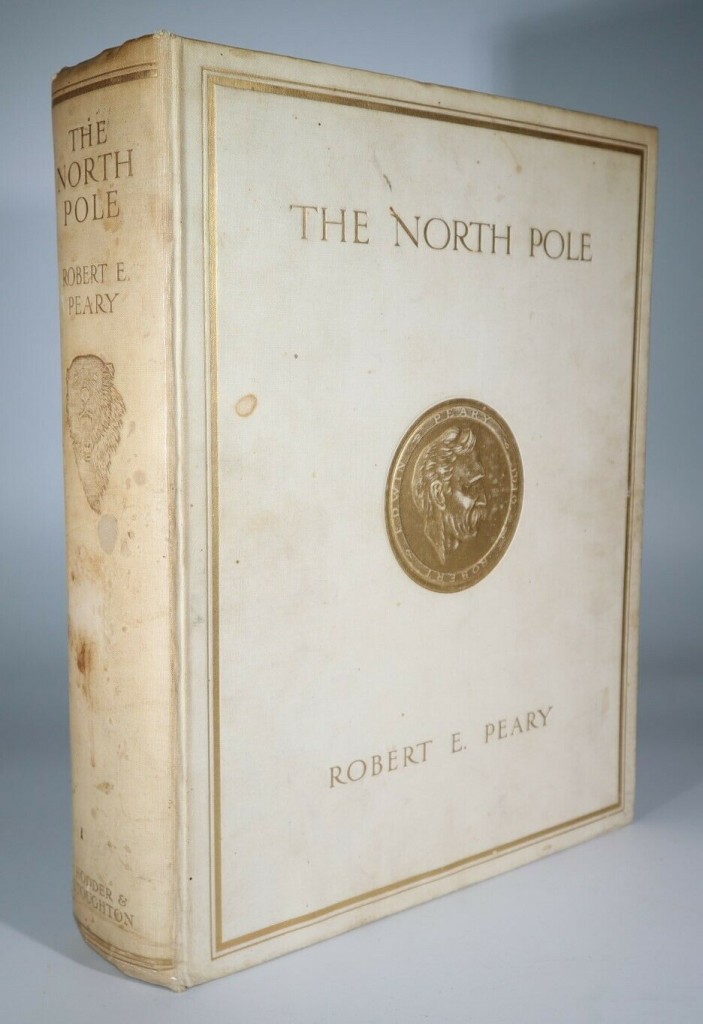
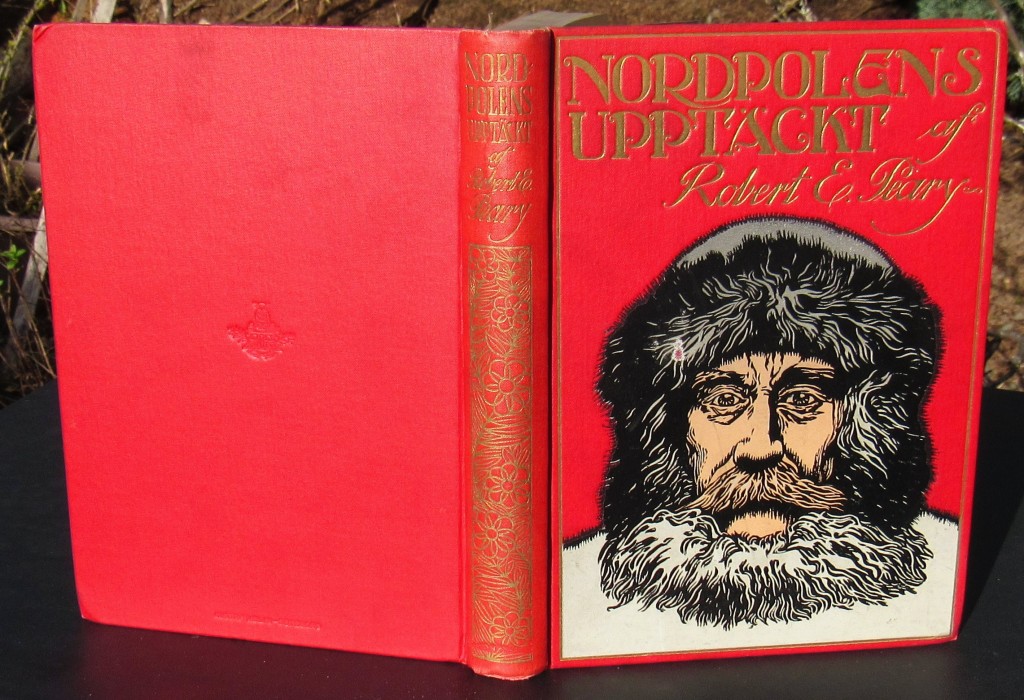
The book was translated in to several languages, French, German, Italian, Swedish, Flemish, and Czech among them.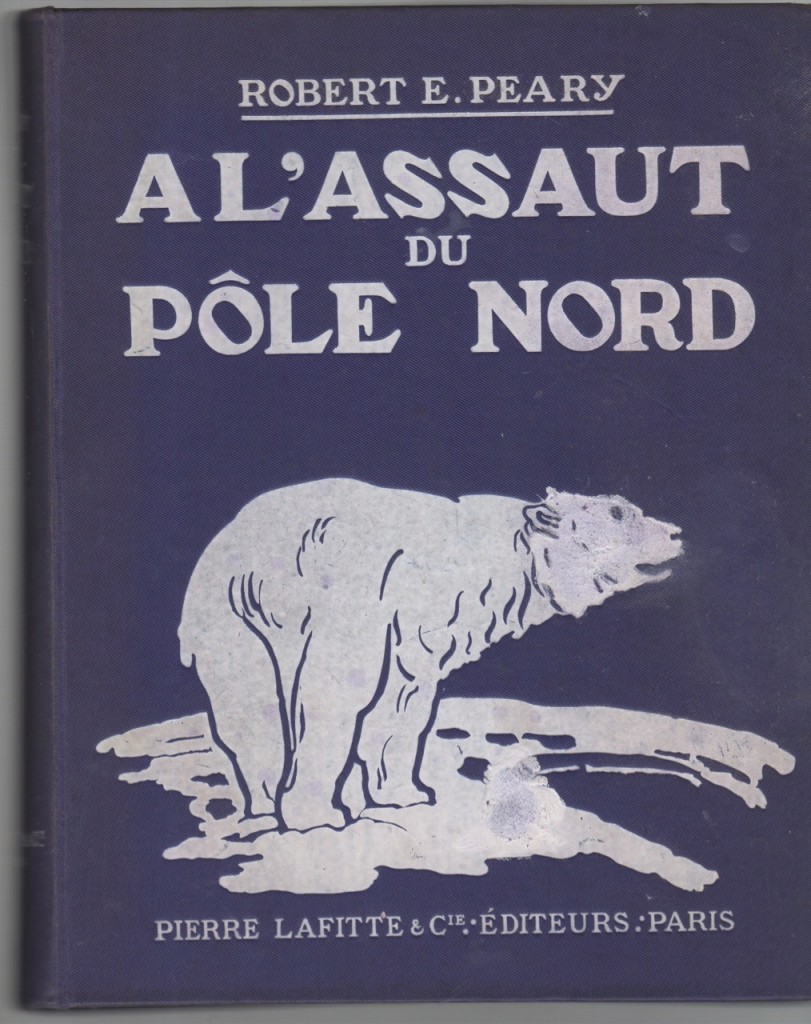
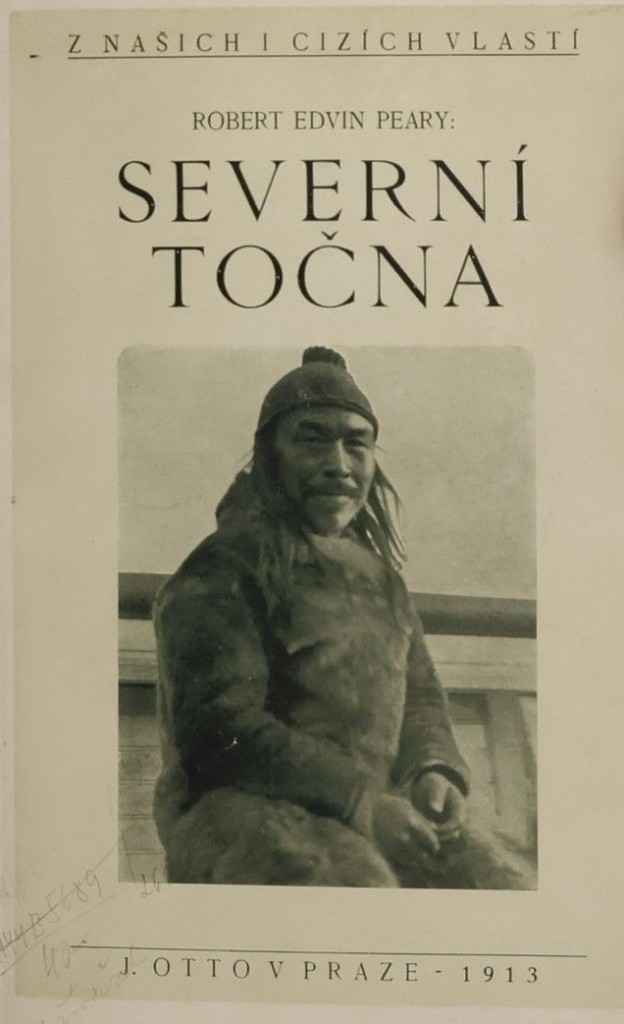
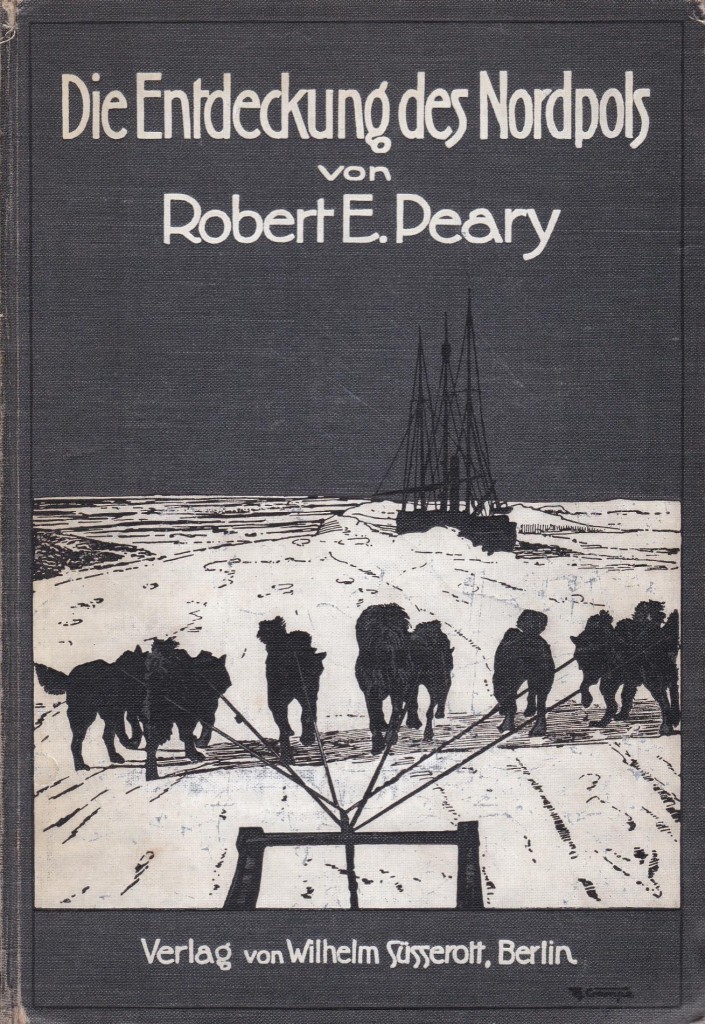
For a more detailed account of how the book was written, see the new introduction to the Cooper Square Press facsimile edition, 2001.
Filed in: Uncategorized.